


-
-
 On Sale
Halco
Halco 150 Watt LED Area Light, 21,900 Lumens, 5000K, 120-277 Volt, Type III, Bronze
SKU: 26631
Model: SAL-150-T3-50-U
$190.34$256.70The SekTor Area Light offers a modern, sleek diecast design which optimizes heat dissipation and thermal flow. The precision TIR optics illuminate the entire optical aperture, creating a visual...- SKU:
- 26631
- Wattage:
- 150 W
- Lumens:
- 21900
- Lumens per Watt:
- 146
- Voltage:
- 120/208/240/277
- Color Temperature (CCT):
- 5000K
- CRI:
- 70+
- Light Distribution:
- Type III
- Life Hours:
- 100,000 Hours
- Dimmable:
- Yes, 0-10V
- Power Factor:
- >0.9
- Finish:
- Bronze
-
 On Sale
Halco
Halco 200 Watt LED Area Light, 29,886 Lumens, 5000K, 120-277 Volt, Type III, Bronze
SKU: 26635
Model: SAL-200-T3-50-U
$252.35$325.38The SekTor Area Light offers a modern, sleek diecast design which optimizes heat dissipation and thermal flow. The precision TIR optics illuminate the entire optical aperture, creating a visual...- SKU:
- 26635
- Wattage:
- 200 W
- Lumens:
- 29986
- Lumens per Watt:
- 149
- Voltage:
- 120/208/240/277
- Color Temperature (CCT):
- 5000K
- CRI:
- 70+
- Light Distribution:
- Type III
- Life Hours:
- 100,000 Hours
- Dimmable:
- Yes, 0-10V
- Power Factor:
- >0.9
- Finish:
- Bronze
-
 On Sale
Halco
Halco 240 Watt LED Area Light, 34,936 Lumens, 5000K, 120-277 Volt, Type III, Bronze
SKU: 26639
Model: SAL-240-T3-50-U
$303.70$379.62The SekTor Area Light offers a modern, sleek diecast design which optimizes heat dissipation and thermal flow. The precision TIR optics illuminate the entire optical aperture, creating a visual comfort appearance without sacrificing performance. The...- SKU:
- 26639
- Wattage:
- 240 W
- Lumens:
- 34936
- Lumens per Watt:
- 146
- Voltage:
- 120/208/240/277
- Color Temperature (CCT):
- 5000K
- CRI:
- 70+
- Light Distribution:
- Type III
- Life Hours:
- 100,000 Hours
- Dimmable:
- Yes, 0-10V
- Power Factor:
- >0.9
- Finish:
- Bronze
-
 On Sale
Halco
Halco 300 Watt LED Area Light, 43,849 Lumens, 5000K, 120-277 Volt, Type III, Bronze
SKU: 26643
Model: SAL-300-T3-50-U
$283.50$451.92The SekTor Area Light offers a modern, sleek diecast design which optimizes heat dissipation and thermal flow. The precision TIR optics illuminate the entire optical aperture, creating a visual comfort appearance without sacrificing performance. The...- SKU:
- 26643
- Wattage:
- 300 W
- Lumens:
- 43849
- Lumens per Watt:
- 146
- Voltage:
- 120/208/240/277
- Color Temperature (CCT):
- 5000K
- CRI:
- 70+
- Light Distribution:
- Type III
- Life Hours:
- 100,000 Hours
- Dimmable:
- Yes, 0-10V
- Power Factor:
- >0.9
- Finish:
- Bronze
-

-

RAB
RAB 160/220/260 Watt LED High Bay, 40,539 Lumens, 3500K/4000K/5000K, 120-277 Volt, V-Hook Mount
SKU: 28862
Model: RBAY17M
$181.90The RBAY17 series are designed to replace up to 1000W metal halide and can be mounted as high as 60 feet. The RBAY17 does more with less, hitting the lumen output of much larger high aby fixtures. This size reduction makes for a product that cuts down on...- SKU:
- 28862
- Wattage:
- 160/210/260 W
- Lumens:
- 40539
- Lumens per Watt:
- 161
- Voltage:
- 120/208/240/277 V
- Color Temperature (CCT):
- 3500K, 4000K or 5000K
- CRI:
- 80+
- Dimmable:
- Yes
- Power Factor:
- >0.9
- Mounting:
- V-Hook
- Finish:
- White
- Options:
- Standard
$181.90 -
 On Sale
Halco
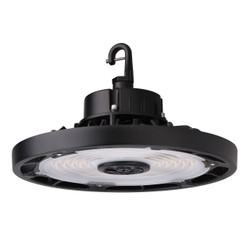
Halco 150 Watt LED High Bay, 20,940 Lumens, 4000K/5000K, 120-277 Volt, J-Hook Mount
SKU: 27720
Model: HRHB-150-CS-U-BL
$109.20$157.64The ProLED Select HoverBay Round Highbay offers the exciting combination of a sleek modern design and premium performance. Equipped with ProLED Select CCT Selectable technology, the HoverBay allows the user select between 4000K and 5000K color...- SKU:
- 27720
- Wattage:
- 150 W
- Lumens:
- 20940
- Lumens per Watt:
- 144
- Voltage:
- 120/208/240/277
- Color Temperature (CCT):
- Tunable White
- CRI:
- 80+
- Dimmable:
- Yes
- Power Factor:
- >0.9
- Mounting:
- J-Hook
- Finish:
- Bronze
MSRP: $157.64$109.20 -
 On Sale
RAB
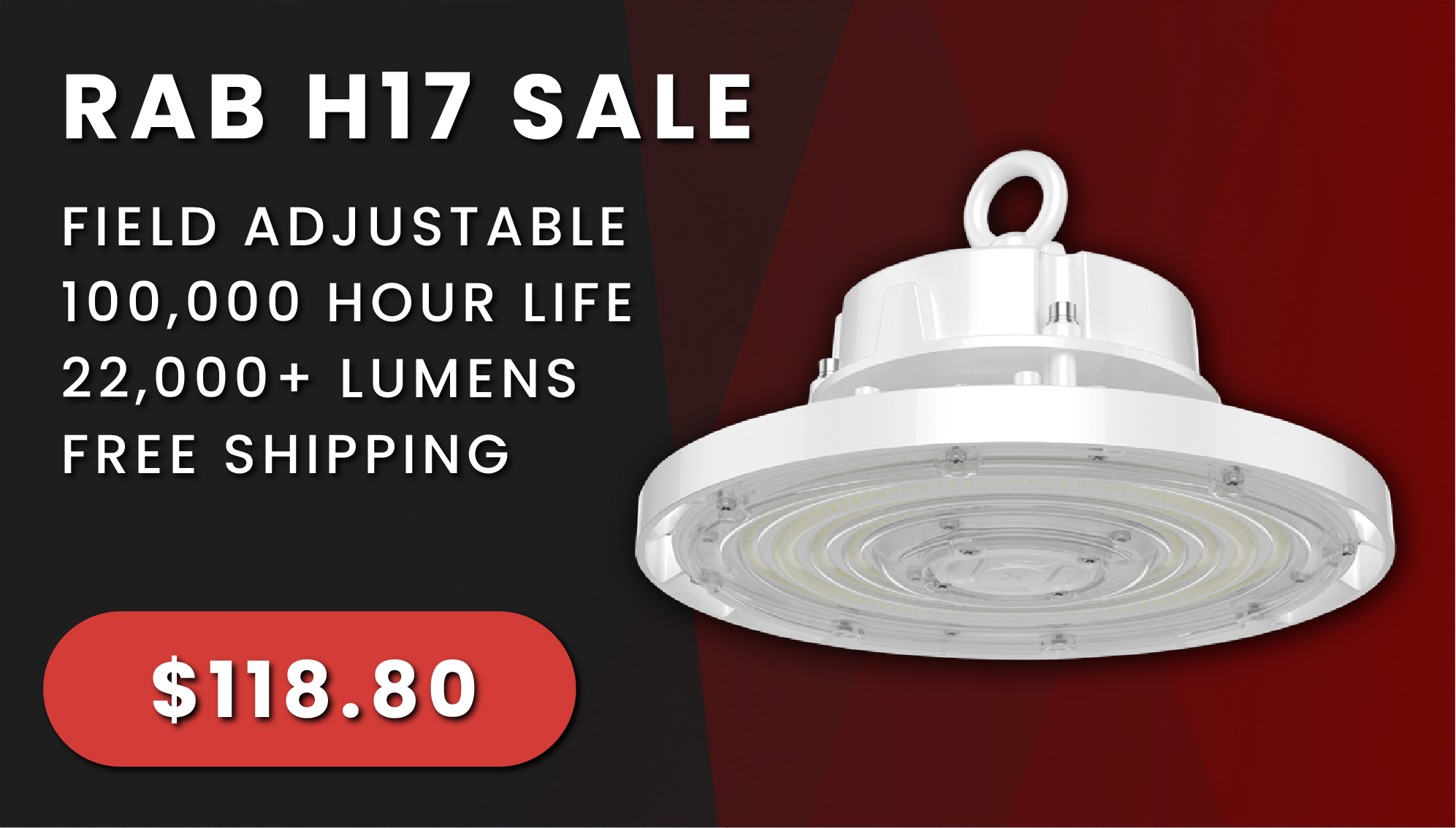
RAB 240/200/150 Watt LED High Bay, 37,253 Lumens, 3000K/4000K/5000K, 120-277 Volt, O-Ring Mount
SKU: 27754
Model: H17XL
$213.00Available in two sizes, the H17 and H17 XL each offer three selectable lumen outputs and two CCTs, making it versatile enough to handle countless applications. The H17 includes an expansion port that...- SKU:
- 27754
- Wattage:
- 160/200/240 W
- Lumens:
- 37253
- Lumens per Watt:
- 168
- Voltage:
- 120/208/240/277
- Color Temperature (CCT):
- Tunable White
- CRI:
- 80+
- Dimmable:
- Yes
- Power Factor:
- >0.9
- Mounting:
- Ring Hanger
- Finish:
- White
Now: $213 -
 On Sale
Halco
Halco 240 Watt LED High Bay, 33,282 Lumens, 4000K/5000K, 120-277 Volt, J-Hook Mount
SKU: 27773
Model: HRHB-240-CS-U-BL
$171.45$241.33The ProLED Select HoverBay Round Highbay offers the exciting combination of a sleek modern design and premium performance. Equipped with ProLED Select CCT Selectable technology, the HoverBay allows the user select between 4000K and 5000K color...- SKU:
- 27773
- Wattage:
- 240 W
- Lumens:
- 33282
- Lumens per Watt:
- 144
- Voltage:
- 120/208/240/277
- Color Temperature (CCT):
- Tunable White
- CRI:
- 80+
- Dimmable:
- Yes
- Power Factor:
- >0.9
- Mounting:
- J-Hook
- Finish:
- Bronze
MSRP: $241.33$171.45
-
-
 On Sale
IDEAL
IDEAL Twister®PRO 344 Red/Tan, SureGrip™, Wire Connectors, Jar of 500
SKU: 27310
Model: 30-644J
$49.70$59.69The Twister® Pro and ProFLEX™ family combines the most comfortable wire connector from IDEAL Electrical with the widest wire range of any multi-colored connectors in the industry. These connectors are designed with a live-action spring and...- SKU:
- 27310
MSRP: $59.69$49.70 -

IDEAL
IDEAL In-Sure® L22 2-Port, Lever Type Wire Connectors, Box of 150
SKU: 28586
Model: 30-10L22
$39.00Lever wire connectors provide the perfect solution for joining solid and stranded wires. These versatile connectors have a compact design and take up minimal room in junction boxes and enclosures. Key Features Releasable connector for solid &...- SKU:
- 28586
$39.00 -

VETO PRO PAC
VETO PRO PAC OT-LC, Waterproof, Molded Base, Large Open Top Tool Bag
SKU: 28504
Model: OT-LC
$219.95THE OT-LC TOOL BAG IS A COMPACT VERSION OF THE XL TOOL BAG WITH PLENTY CAPACITY TO HOLD OVER 75 HAND TOOLS. Load it up with meters, butt-sets, fixtures or whatever else you need. Top-in loading and unloading allows for a less disciplined grab and bolt...- SKU:
- 28504
$219.95 -

U-Mark, Inc.
U-Mark U-Phase® Wire Marker Pack; Red, White, Blue, and Green
SKU: 19912
Model: 10718PSA
$19.76SKU 19912 Brand U-Mark, Inc MPN 10718PSA Number of Pieces 4 Colors Blue, Red, White, Green Style Valve Activated Length 5 in. Diameter 5/8 in. Drying Time 90...- SKU:
- 19912
$19.76
-

RAB
RAB H17XXLB LED Round High Bay - 300, 400 or 500 Watt | 79,203 Lumens - 750-1000W MH Replacement - Tunable White - 120-277 Volt - 3/4" NPT Hook Mount
$473.75Available in four sizes, the H17 series offers three selectable lumen outputs and three CCTs, making it versatile enough to handle countless applications. The H17XXLB includes an expansion port that... -

RAB
RAB H17XLB LED Round High Bay - 150, 200 or 240 Watt | 37,253 Lumens - 400-750W MH Replacement - Tunable White - 120-277 Volt - 3/4" NPT Hook Mount
MSRP: $213.00$186.25Available in four sizes, the H17 series offers three selectable lumen outputs and three CCTs, making it versatile enough to handle countless applications. The H17XLB includes an expansion port that... -

RAB
RAB H17B LED Round High Bay - 100, 120 or 150 Watt | 22,224 Lumens - 350-400W MH Replacement - Tunable White - 120-277 Volt - 3/4" NPT Hook Mount
MSRP: $149.00$130.00Available in four sizes, the H17 series offers three selectable lumen outputs and three CCTs, making it versatile enough to handle countless applications. The H17B includes an expansion port that... -

RAB
RAB H17SB LED Round High Bay - 60, 80 or 100 Watt | 14,959 Lumens - 200-350W MH Replacement - Tunable White - 120-277 Volt - 3/4" NPT Hook Mount
MSRP: $128.00$111.25Available in four sizes, the H17 series offers three selectable lumen outputs and three CCTs, making it versatile enough to handle countless applications. The H17SB includes an expansion port that... -

RAB
RAB H17XXL LED Round High Bay - 300, 400 or 500 Watt | 79,203 Lumens - 750-1000W MH Replacement - Tunable White - 120-277 Volt - 3/4" NPT Hook Mount
$473.75Available in four sizes, the H17 series offers three selectable lumen outputs and three CCTs, making it versatile enough to handle countless applications. The H17XXL includes an expansion port that... -

RAB
RAB H17S LED Round High Bay - 60, 80 or 100 Watt | 14,959 Lumens - 200-350W MH Replacement - Tunable White - 120-277 Volt - 3/4" NPT Hook Mount
MSRP: $128.00$111.25Available in four sizes, the H17 series offers three selectable lumen outputs and three CCTs, making it versatile enough to handle countless applications. The H17S includes an expansion port that... -
Halco
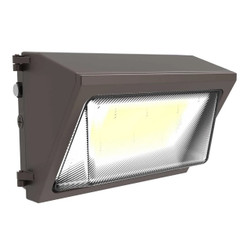
Halco ProLED 23533 LED Wall Pack - Power and Color Select - 13344 Lumens | 320-400 Watt MH Replacement - Type IV - 120-277 Volt - Photocell - WPFS2-WS-CS-U-PC
$135.00The ProLED Select Wallpack Series provides the best value in the Commercial & Industrial Wallpack market to date. The innovative option to select both Wattage and Color Temperature unrivalled in... -
RAB
RAB RBAY17M LED Linear High Bay - 160, 220 or 260 Watt | 40,539 Lumens - 750W MH Replacement - Tunable White - 120-277 Volt - V-Hook Mount
MSRP: $265.00$187.25The RBAY17 series are designed to replace up to 1000W metal halide and can be mounted as high as 60 feet. The RBAY17 does more with less, hitting the lumen output of much larger high aby fixtures... -

RAB
RAB SEAL4 4ft. LED Vapor Proof - Power and Color Select | (3) 32W T8 Equivalent - 120-277 Volt - Wet Location - IP66 - NSF Rated
$97.50The RAB SEAL field-adjustable LED vaportight light fixtures and versatile power and color select lights. Each fixture can adjust between three different power settings to adjust the baseline light... -

RAB
RAB H17 LED Round High Bay - 100, 120 or 150 Watt | 22,224 Lumens - 350-400W MH Replacement - Tunable White - 120-277 Volt - 3/4" NPT Hook Mount
MSRP: $149.00$126.00Available in four sizes, the H17 series offers three selectable lumen outputs and three CCTs, making it versatile enough to handle countless applications. The H17 includes an expansion port that...